Sort Them Ducks Shop Layout and Shelf Map
One store, several neighborhoods. Learn the windows, then stop recrossing the whole floor.
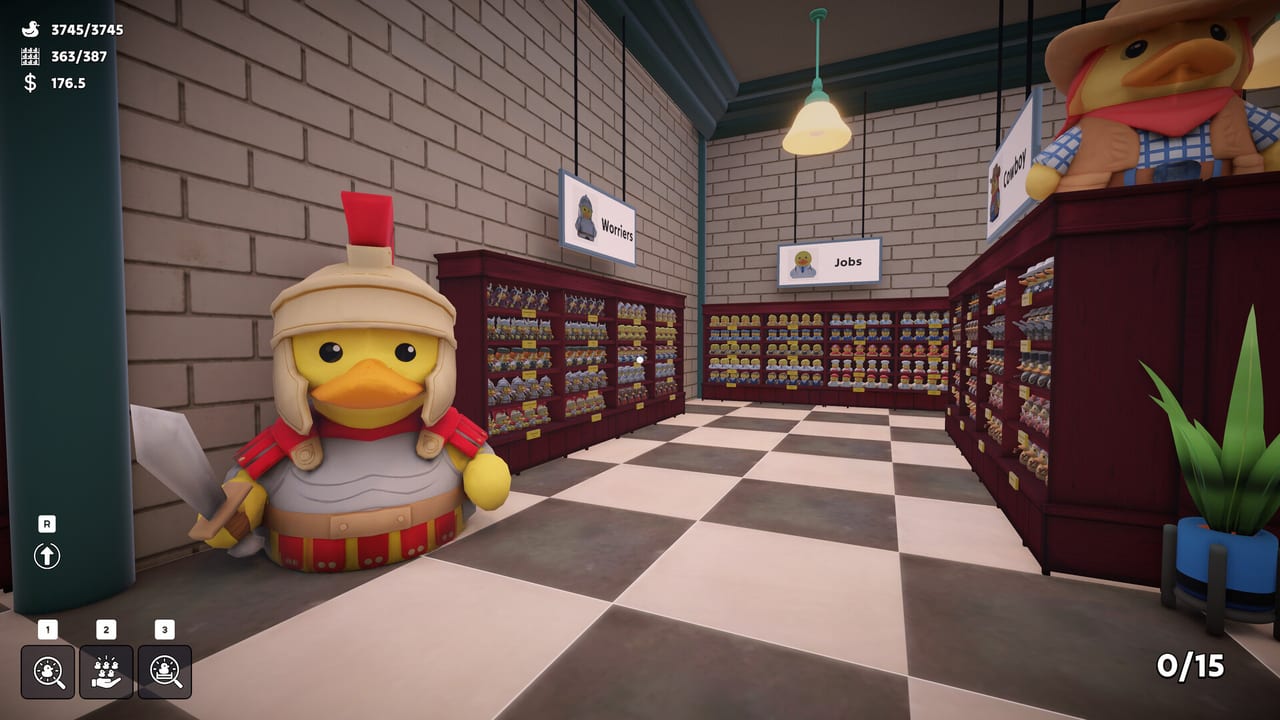
Sort Them Ducks is not an open world. It is a single shop that feels large because ducks occupy every sightline. A map page still helps, because players describe neighborhoods: food units with fussy hitboxes, tall rows that need jumps, and window aisles that haze. This is a mental map, not a GPS dump of every plank.
Walk it with the walkthrough and tick it with the checklist. If you cannot find a duck, the map will not spawn it — missing ducks will.
Neighborhoods players actually name
Spawn / chaos floor — the opening pile. Learn two signs here, then leave. Lingering makes mixed handfuls.
Easy costume wall — pirates, knights, dinosaurs, the silhouettes you can read from across a tile. Fine first-hour hunting ground. See categories.
Kitchen / food — chefs nearby, fruit units that grab through the back. Approach from the aisle. Confusing ducks covers the prompt theft.
Window belt — superheroes, countries, animals in a lighting report. White haze, fog-like filter, hard on eyes. Save for last if it bothers you, or take breaks. Performance if it is flashing rather than fog.
Tower corner — color-split families. Treat as a precision neighborhood, not a vibe neighborhood.
Verticals — any tall unit. High shelves is the local transit guide.
Sweep patterns that waste less time
Do not orbit the whole shop with a mixed hand. Pick a neighborhood, fill the hand with that neighborhood’s names, empty the hand, then rotate. After carry upgrades, you can hold a whole aisle’s leftover. That is when the map collapses into a couple of loops instead of a maze.
If you use fill-from-hand, face the pile in the neighborhood you mean. The magnet does not respect your tour plan.
Lighting as geography
Windows are landmarks and hazards. If an aisle blinds you, it is probably the haze belt. Turn around to read HUD names, then place. Ryzen flashing is different from haze; flashing wants the launch option. Haze wants sunglasses or a later visit.
After the floor is empty
The map becomes a perimeter walk for eggs and dropped stragglers. Walk behind units. Look up. Look at window sills. Then stop mapping and go live in the finished shop for a minute. That is the screenshot the Steam page was selling.
When a patch moves furniture — it has not, yet — come back here. Until then, neighborhoods are stable enough to learn by heart, which is the real endgame of a tidy-up game.
Why a single room still needs a map
People get lost in Sort Them Ducks because every tile looks like ducks, not because the architect hid a labyrinth. A neighborhood name is a way to stop your eyes from treating the whole floor as one pile. Once food is “that hitbox aisle” and superheroes are “the bright windows,” you can plan a loop that does not recross spawn. Carry upgrades make the loop fatter; they do not replace it.
If you play on a handheld, the map is even more useful because distant signs shrink. Walk to a board, read it, then work that board until the hand is empty. Zoom exists, and movement warns that zoom can stick — so prefer walking to a sign over scoping across the shop. Your feet are the real minimap.
Frequently Asked Questions
Quick answers to the questions players ask after a long sorting session.
Is there a minimap?
Not in the way an action game has one. Category signs are the map. This page names neighborhoods players report.
Which aisles haze?
A detailed review called out superheroes, countries, and animals near windows. Save them if the fog bothers your eyes.
Should I clear the spawn pile first?
Clear enough to learn signs, then commit to neighborhoods. Emptying spawn with mixed handfuls is how you recross the shop forever.
Where are Tower shelves?
Treat them as their own corner. Match HUD color names. Extras belong on missing ducks, not on this map.